Solar PV · The money
What solar actually costs in Kent
Not a headline price, because there is no such thing. What moves the number, what a proper quote contains, and how to compare two of them fairly.



You will find sites that publish a price for solar. It is always an average, and an average roof does not exist. What follows is the list of things that actually move the number on a domestic installation in Thanet and east Kent, so you can look at your own house and see where it sits, and then get a fixed price from someone who has stood on the roof.
What sets the price
Roughly in order of how much difference each one makes.
- System size. The number of panels, which is set by how much usable roof there is and how much electricity the house uses. Bigger is not automatically better: an array that generates far more than the house can use or store is exporting most of it at the lowest rate.
- Whether a battery is included. The single biggest optional item. Worth it for some households and not for others, which is a question about when you use power, not about the battery.
- On roof or in roof. On roof mounting, rails over the existing covering, is the standard and the cheaper option. An in roof system replaces the covering under the array and costs more, unless the roof is being re tiled anyway, in which case it can come out cheaper because those tiles are not needed.
- Scaffold. Height, access, whether it needs to sit on the pavement, and whether the council needs to license that. A bungalow and a three storey Regency terrace in Ramsgate are not the same scaffold.
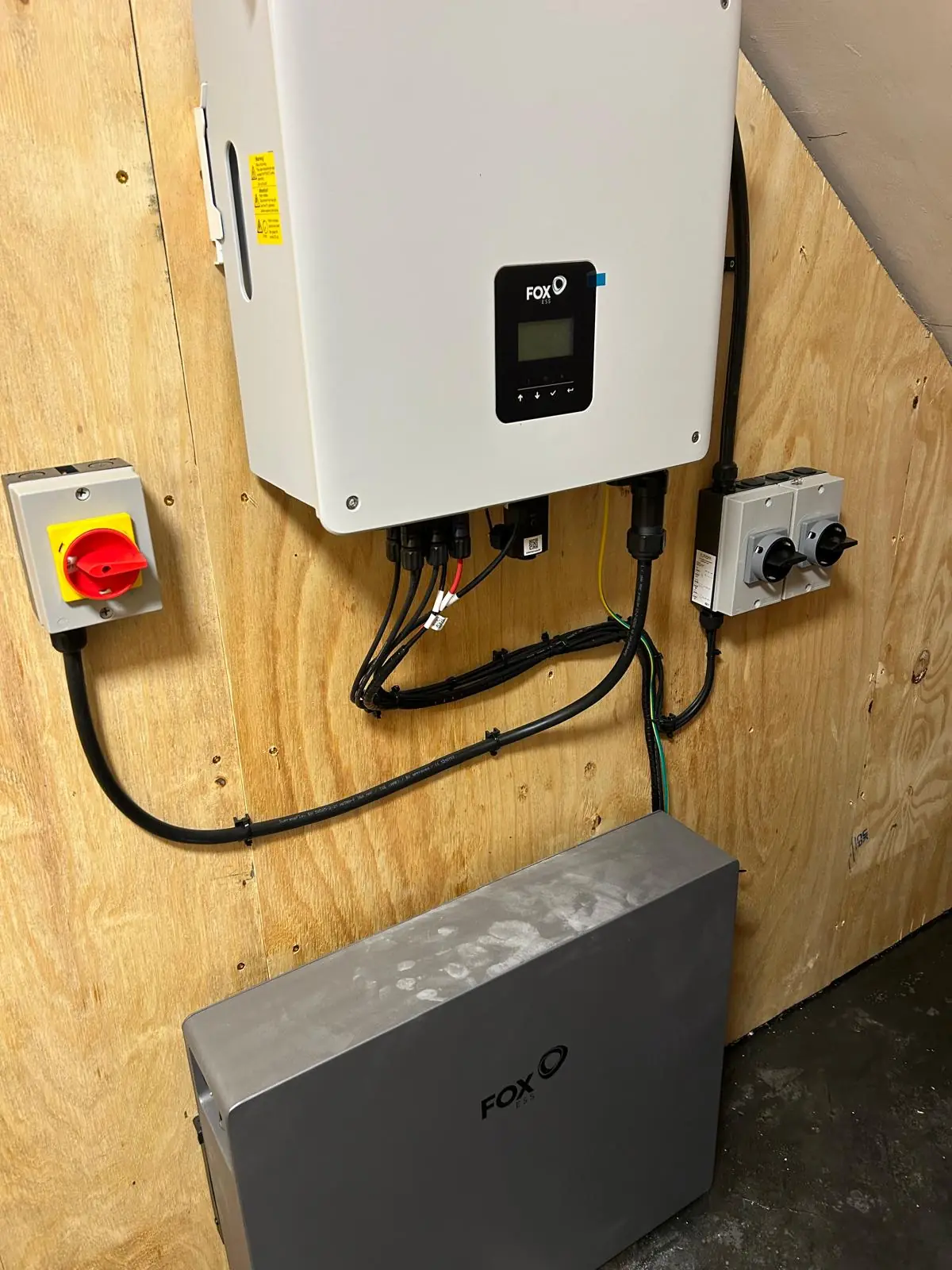
- The inverter. A string inverter, or a hybrid one that can take a battery later. Choosing the hybrid at the outset costs a little more and saves a great deal if you add storage in two years.
- The electrical work at the board. Sometimes the existing consumer unit cannot take a generator safely and needs work first. This is the item most often missed off other quotes and found on the day. It is looked at in the survey here, and priced separately so you can see it.
- The cable run. From the roof to the inverter and from the inverter to the board. Short and simple in a semi; long and awkward from an outbuilding across a garden.
- Mounting for the site. Coastal exposure changes the fixings and the rail calculation. A cliff top roof in Broadstairs takes more wind than one in Canterbury, and the hardware has to be specified for it.
- Extras. Bird proofing, monitoring, an EV charger that can use surplus generation. Worth having, worth pricing as separate lines.
What a proper quote contains
A quote you can compare against another one is itemised. It names the panels, the inverter and the battery if there is one, with the model numbers. It states the system size in kilowatts peak and gives a generation estimate with the assumptions written down: the aspect, the pitch, the shading, the location. It says what is included, what is excluded, and what the price does if something unexpected turns up at the board.
It carries an MCS number, because without one there is no certificate, and without a certificate there is no export payment. It states the warranties separately for the panels, the inverter and the workmanship, because they are three different things from three different parties. And it is a fixed price for the work described.
Comparing two quotes
- Compare the system size first. A cheaper quote for a smaller array is not a cheaper quote.
- Compare the inverter. A string inverter against a hybrid is not like for like.
- Look for board work. If one quote has it and the other does not, ask the second installer whether they looked.
- Check both generation estimates use the same assumptions. A sunnier estimate is not a better system.
- Check both carry an MCS number, and check it on the MCS register. It takes a minute.
What should worry you
- A price given without anyone seeing the roof.
- A discount that expires today.
- No MCS number, or one that does not check out.
- A generation estimate with no assumptions attached.
- A roof lease dressed up as free solar. Read it with a solicitor.
Getting a number for your roof
The quote form asks for the things that set the price: the address, so the roof can be looked at on the map before anyone comes out, whether you want a battery, and how you would like the panels to sit. A photograph of the roof from the ground is worth more than any of it. From that you get a survey, and from the survey a fixed, itemised price.
What goes on the roof
The kit named on our quotes, so you can look it up
Questions
About the money
Why will nobody give me a price over the phone?
Because the honest answer depends on the roof. Two houses on the same street can need different mounting, different scaffold and different electrical work at the board. Anyone quoting without looking is quoting for an average house, and you do not live in one.
Is VAT charged on solar?
At the time of writing, residential solar and battery installations in Great Britain are zero rated for VAT. A quote should say so plainly. If a quote adds VAT to a domestic installation, ask why.
Do I get paid for what I export?
Yes, through the Smart Export Guarantee, at a rate set by the supplier you choose. It requires an MCS certificate for the installation, which is one of several reasons the MCS number on a quote matters.
Is a battery worth the extra?
It depends entirely on when you use electricity. If the house is empty all day, a battery stores what would otherwise be exported at a low rate and gives it back in the evening at your full rate, and that can change the sums considerably. If someone is home all day using power, less so. The survey works it out with your actual usage rather than a rule of thumb.
What is the catch with "free solar"?
Usually a roof lease. A company fits panels at no cost and keeps the export income for twenty years or more, and the lease sits on your title. It complicates selling the house and remortgaging, and you get a fraction of the benefit. There are legitimate schemes, but read the lease with a solicitor before signing one.
Get a price
A fixed price,
for your roof
A postcode and a rough idea of the job is enough. You get a straight answer from the people who would do the work, not a sales call.